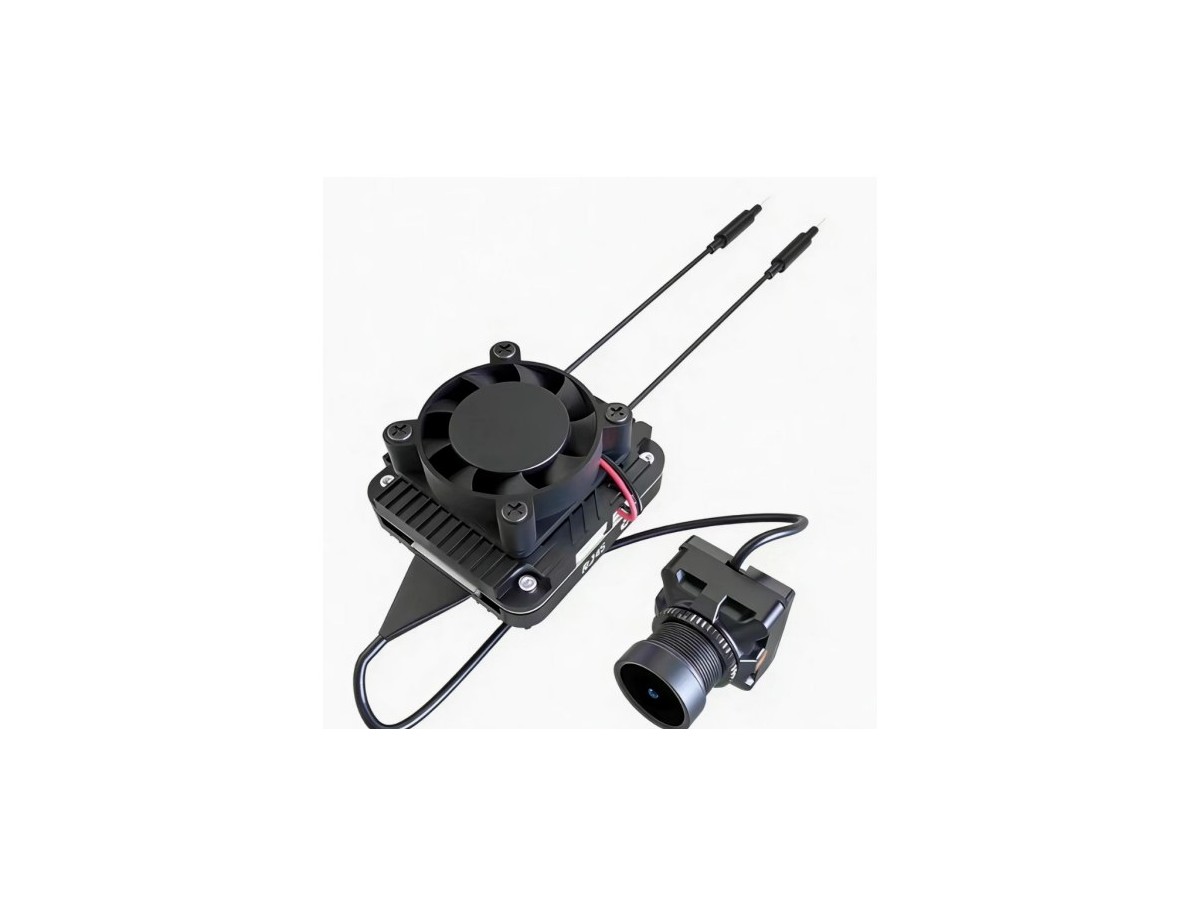
Radio round-trip time and camera-to-screen delay measure different parts of a video system.
2 ms, 35 ms and one frame: where does latency come from?
A frame passes through camera exposure and readout, image processing, encoding, wireless transfer, decoding and display. ZYRO Link's brief cites typical radio round-trip time as low as 2 ms; ZYRO Cam's brief cites end-to-end image latency as low as 35 ms. Their measurement boundaries differ, so the figures cannot be compared directly.
Follow the whole frame
Total delay is approximately capture + processing + encoding + wireless transfer + decoding and display. Buffers, retransmissions and a monitor refresh can add delay or jitter even when the radio stage is fast.
Digital links commonly spend time encoding and decoding. H.265 can improve quality at a given bitrate, but buffering and receiver performance affect delay. Analog video avoids complex compression and can provide a shorter image path while generally trading away some resolution and spectrum efficiency.
Frame timing
A single interval lasts about 33.3 ms at 30 fps, 16.7 ms at 60 fps and 11.1 ms at 90 fps. If any stage waits one full frame, that interval contributes to the total. Higher frame rate can shorten the wait for the next frame, but increases processing and bitrate demand.
| Video mode | Approximate frame interval | Main priority |
|---|---|---|
| 4K30 | 33.3 ms | Detail |
| 1080p60 | 16.7 ms | Detail and response |
| 1080p90 | 11.1 ms | Fast feedback |
Measure the visible result
State whether the test measures network RTT or light entering the camera to a picture appearing on screen. Fix resolution, codec, frame rate and bitrate. Film a timing reference and the receiving display using a common clock, then report a range and jitter rather than only a minimum value.