A wide field of view captures more surroundings, but lens projection can change how straight lines and distances appear.
Why do wide-angle images bend near the edges? FOV and lens distortion
A wide FPV view helps a pilot see obstacles around the flight path, yet straight lines near the frame edge can bow outward. Field of view (FOV) and lens distortion describe related but different properties.
FOV is coverage; distortion is geometry
FOV is the angular extent of the scene recorded by a lens and sensor. It depends on focal length, sensor size and any digital crop. A shorter focal length on the same sensor generally shows more of the surroundings. Distortion describes how points are mapped from the scene to the image. Barrel distortion bends straight lines outward near the edges; a correction algorithm can straighten them but often crops or stretches part of the picture.
A quoted diagonal FOV is not the same as horizontal or vertical FOV. Compare the same axis and sensor mode when evaluating cameras. A 16:9 crop, resolution mode or stabilization crop can narrow the usable image even if the lens itself is unchanged.
Perspective is another source of apparent shape change: nearby objects look much larger than distant ones even through a corrected lens. Camera tilt changes the horizon position. These effects should not automatically be diagnosed as lens distortion.
Choose for the task
For fast FPV, wide coverage can improve awareness, but judge whether edge distortion interferes with steering cues. For inspection, measurement or target identification, central detail, calibration and consistent projection may matter more than maximum angle. Compare sample images of a grid or building façade at the intended distance, check correction settings and mount angle, and repeat the test in the chosen video mode.
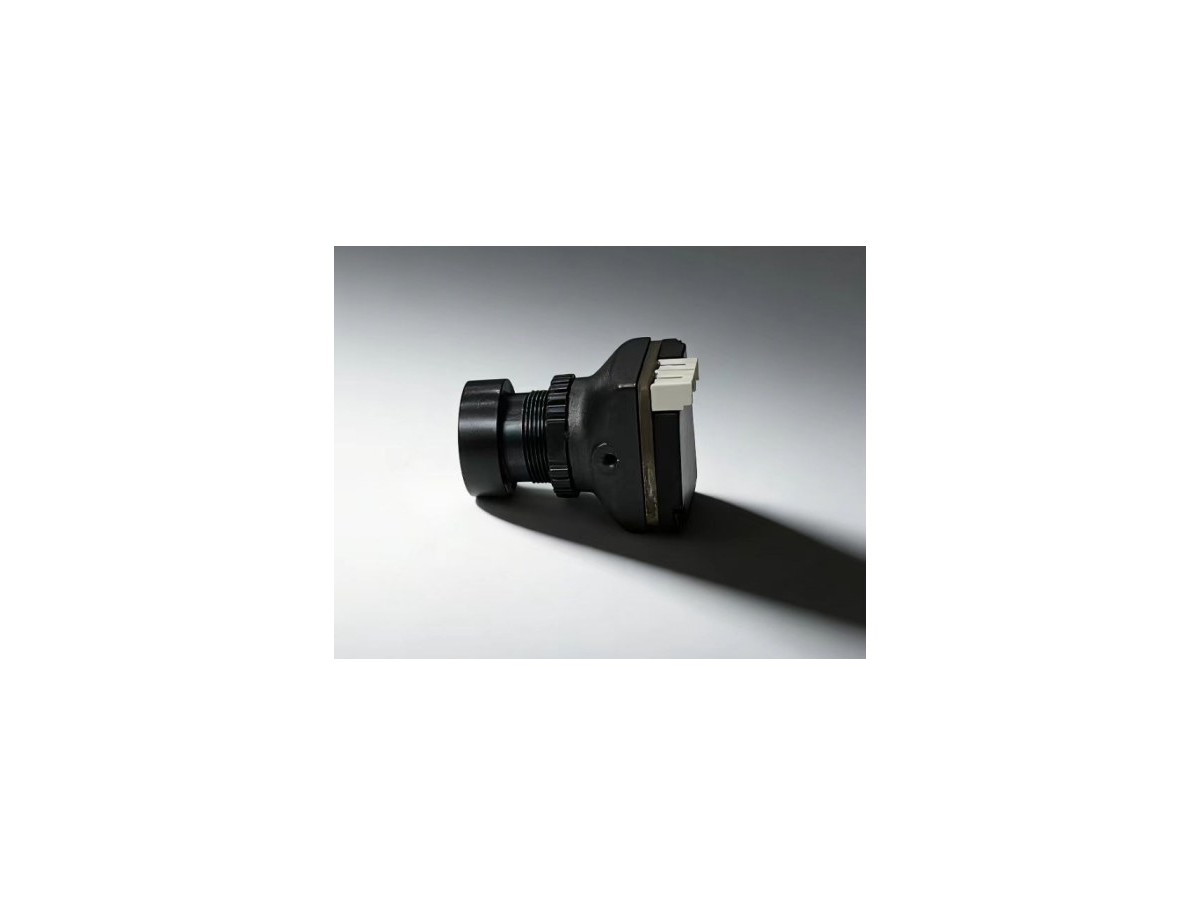
The lens must be evaluated together with its sensor, image pipeline and final display; one FOV number cannot describe the complete viewing experience.